Sequential Offer Harvesting: Building Profit Layers from Bookmaker Bonus Codes in Casino and Sports Markets
Frankie Frank · Aug 1, 2026

Sequential Offer Harvesting: Building Profit Layers from Bookmaker Bonus Codes in Casino and Sports Markets
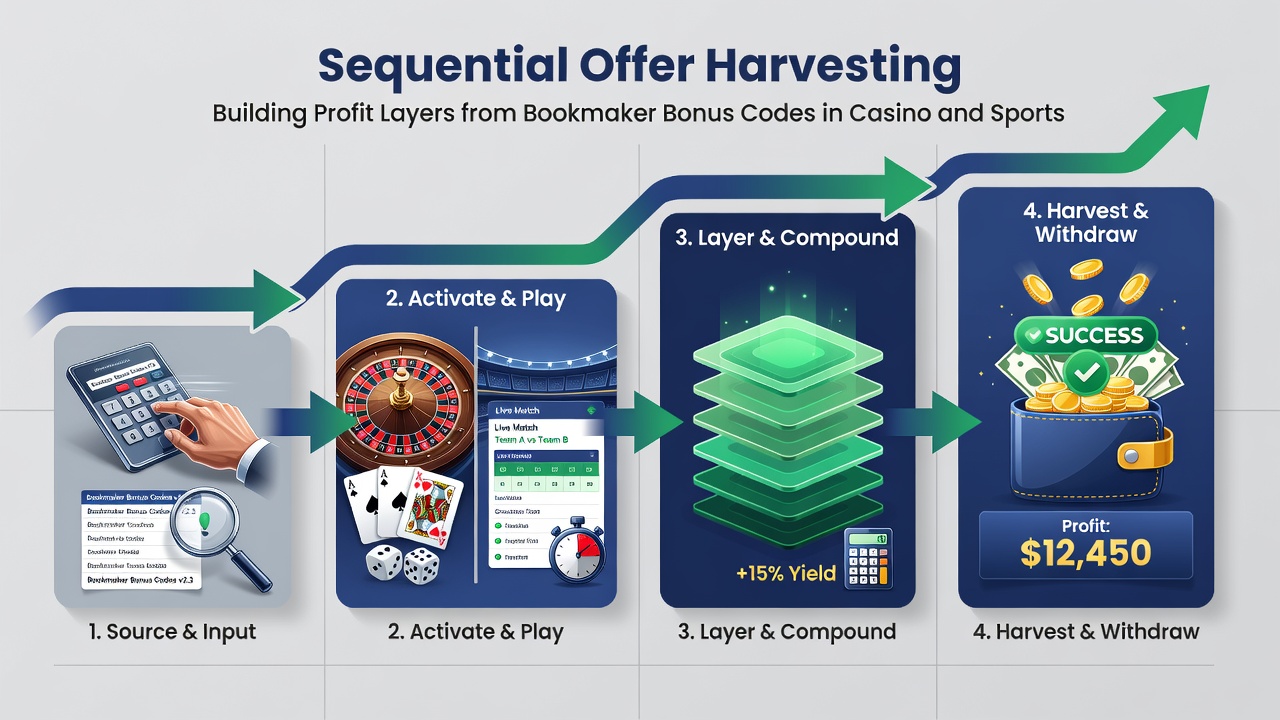
Sequential offer harvesting involves the systematic use of bookmaker bonus codes to construct multiple profit layers across casino and sports markets, where participants activate no-deposit offers, deposit matches, and reload promotions in a timed sequence that maximizes coverage before any single market saturates. Observers note that this approach relies on precise tracking of wagering requirements, expiry dates, and eligibility rules that vary by operator and jurisdiction.
Core Mechanics of Sequential Harvesting
Participants begin with entry-level codes that require minimal or no initial deposits, then progress to matched offers that scale with deposit size, and finally incorporate repeat promotions that extend the cycle without resetting prior gains. Data from industry reports shows that operators release these codes through email lists, affiliate networks, and app notifications, creating windows of availability that last from hours to several days. Those who monitor these releases coordinate activation across separate accounts to avoid overlap in terms and conditions.
Application in Sportsbook Markets
In sports betting, sequential harvesting starts with free bet credits earned from registration codes, followed by matched deposit bonuses tied to specific events such as major league fixtures. Research from the Australian Gambling Research Centre indicates that participants often allocate these layers to correlated markets like pre-match and in-play odds, allowing one outcome to offset exposure in another. Figures reveal that operators adjust maximum stake limits and minimum odds requirements on these promotions, which influences how layers stack without triggering early voids.
Integration with Casino Bonus Structures
Casino segments contribute through slot-specific or table game codes that carry distinct playthrough multipliers, and sequential users apply these after sports layers reach completion to prevent cross-market restriction flags. A study published by the University of Nevada, Reno found that casino offers frequently include game weighting systems where slots contribute 100 percent toward requirements while table games contribute less, prompting harvesters to sequence accordingly. This sequencing creates profit layers that accumulate as each bonus completes its cycle independently.
Timing and Market Conditions in August 2026
Market activity in August 2026 aligns with overlapping sports calendars that include football pre-seasons and tennis grand slams, periods when operators increase code frequency to capture seasonal volume. Participants coordinate harvests around these peaks because reload codes tied to event-specific promotions become available more often, extending the number of active layers. Regulatory updates in several regions during this timeframe introduced new disclosure rules for bonus terms, which affected how operators structure code eligibility without altering the underlying harvesting sequence.
Tracking and Compliance Considerations
Successful execution depends on detailed record-keeping of each code's terms, including minimum deposit thresholds, maximum cashout caps, and restricted payment methods. Industry associations such as the European Gaming and Betting Association have documented that operators enforce single-account policies per household, which requires harvesters to maintain separation across platforms. Those who study compliance patterns report that violations trigger bonus forfeitures, so sequences incorporate buffer periods between activations to satisfy cooldown intervals.
Conclusion
Sequential offer harvesting assembles profit layers by chaining bookmaker bonus codes across casino and sports markets through careful timing and adherence to individual promotion rules. Available data from regulatory and academic sources demonstrates that the method operates within existing market structures, where code availability and requirement structures determine the number of viable layers at any given point. Operators continue to refine these offers in response to participation trends observed through 2026.